As digital advertising and analytics become more dependent on accurate data, businesses are paying closer attention to how information is collected and transferred between websites, apps, advertising platforms, and analytics tools. One approach gaining attention is server-side tracking.
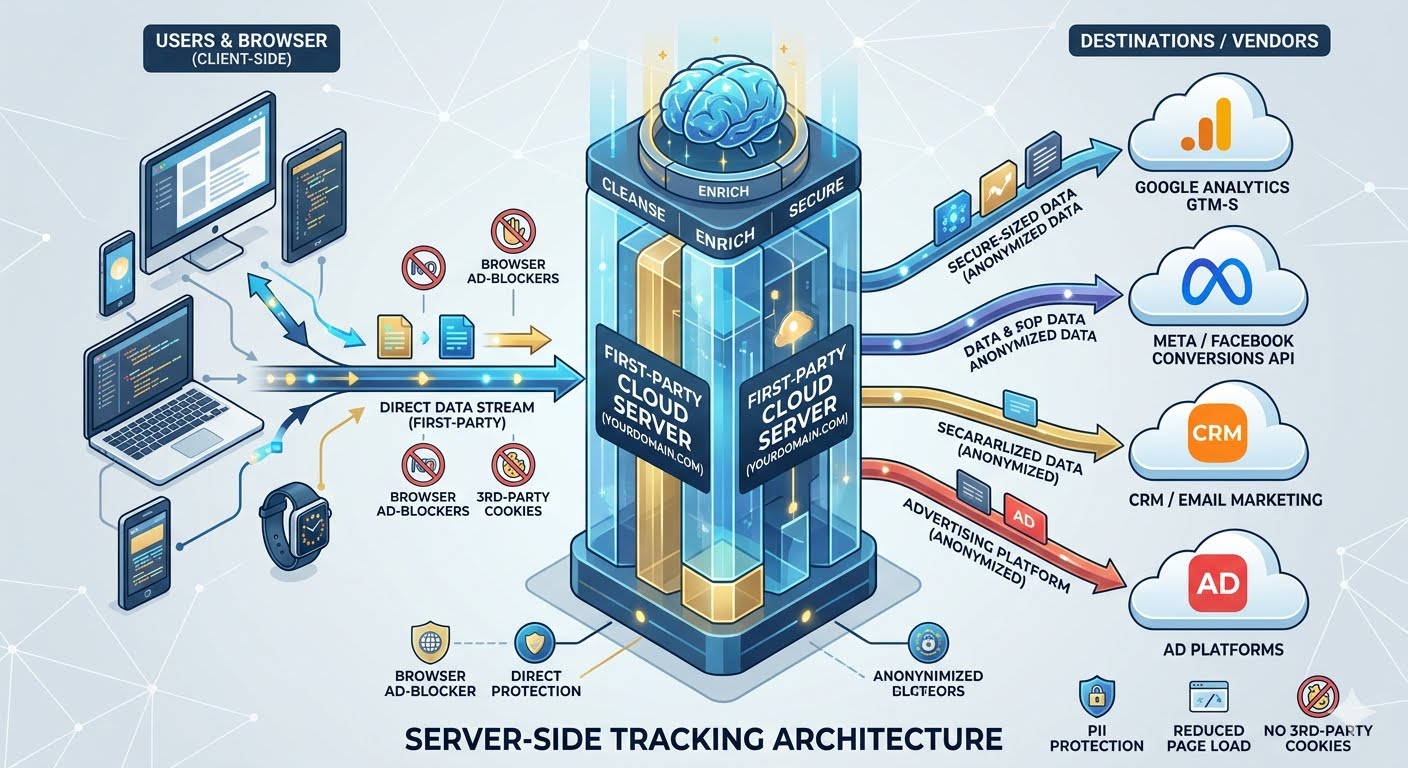
Unlike traditional browser-based tracking, where data is collected and sent directly from a user’s browser, server-side tracking routes information through a business’s own server or a server-controlled environment before it is delivered to platforms such as Google Analytics, Meta, or other marketing systems.
Server-side tracking is not automatically the right choice for every business. It can introduce additional technical requirements, costs, and maintenance. However, there are certain situations where evaluating it makes a lot of sense.
You Need More Reliable Data
One of the biggest reasons to evaluate server-side tracking is data reliability.
Browser-based tracking can be affected by browser privacy restrictions, tracking prevention features, ad blockers, network issues, and changes in how cookies are handled. As a result, businesses may see gaps between actual customer activity and what their analytics or advertising platforms report.
Server-side tracking can provide greater control over how important events are processed and forwarded. This can be especially valuable for businesses that depend heavily on conversion data for advertising optimization, reporting, or attribution.
For example, an online store may generate hundreds of purchases each month, but its browser-based tracking system may fail to record some of those transactions. A server-side setup can help the business capture purchase information from its own systems and transmit the relevant event data more consistently.
Your Advertising Spend Is Significant
The more money a business spends on advertising, the more important accurate conversion data becomes.
If a company is spending thousands of dollars each month on paid search, social media advertising, or other digital campaigns, even a relatively small amount of missing or inaccurate conversion data can affect campaign optimization.
Advertising platforms use conversion signals to determine which audiences, ads, and campaigns are producing results. Poor-quality signals can make it harder for algorithms to optimize effectively.
Server-side tracking may therefore be worth evaluating when inaccurate measurement could have a meaningful financial impact on the business.
Use one clear objective, establish ownership, and document constraints before selecting tactics or tools.
You Have More Complex Customer Journeys
Businesses with simple websites may not need sophisticated tracking infrastructure. However, tracking becomes more complicated when customers interact with multiple systems.
For example, a customer might discover a business through an advertisement, visit a website, create an account, speak with a sales representative, complete a payment through a separate system, and eventually become a customer. Important events may occur across several platforms instead of entirely inside a web browser.
Server-side tracking can help organizations bring important events together and create a more controlled flow of information between their internal systems and marketing platforms.
This can be particularly useful for ecommerce companies, subscription businesses, lead-generation companies, marketplaces, and organizations with custom applications.
You Need Greater Control Over Data
Another reason to consider server-side tracking is control.
With browser-based tracking, third-party scripts are often loaded directly onto a website. Server-side tracking can reduce the amount of marketing and analytics logic that needs to run in the user’s browser.
This can give businesses more control over what information is sent to external platforms and how that information is transformed before transmission. Organizations can potentially filter unnecessary data, standardize events, or apply business rules before information reaches a destination.
That level of control can be useful for companies with more demanding privacy, security, governance, or data-management requirements.
Your Website Uses Many Tracking Scripts
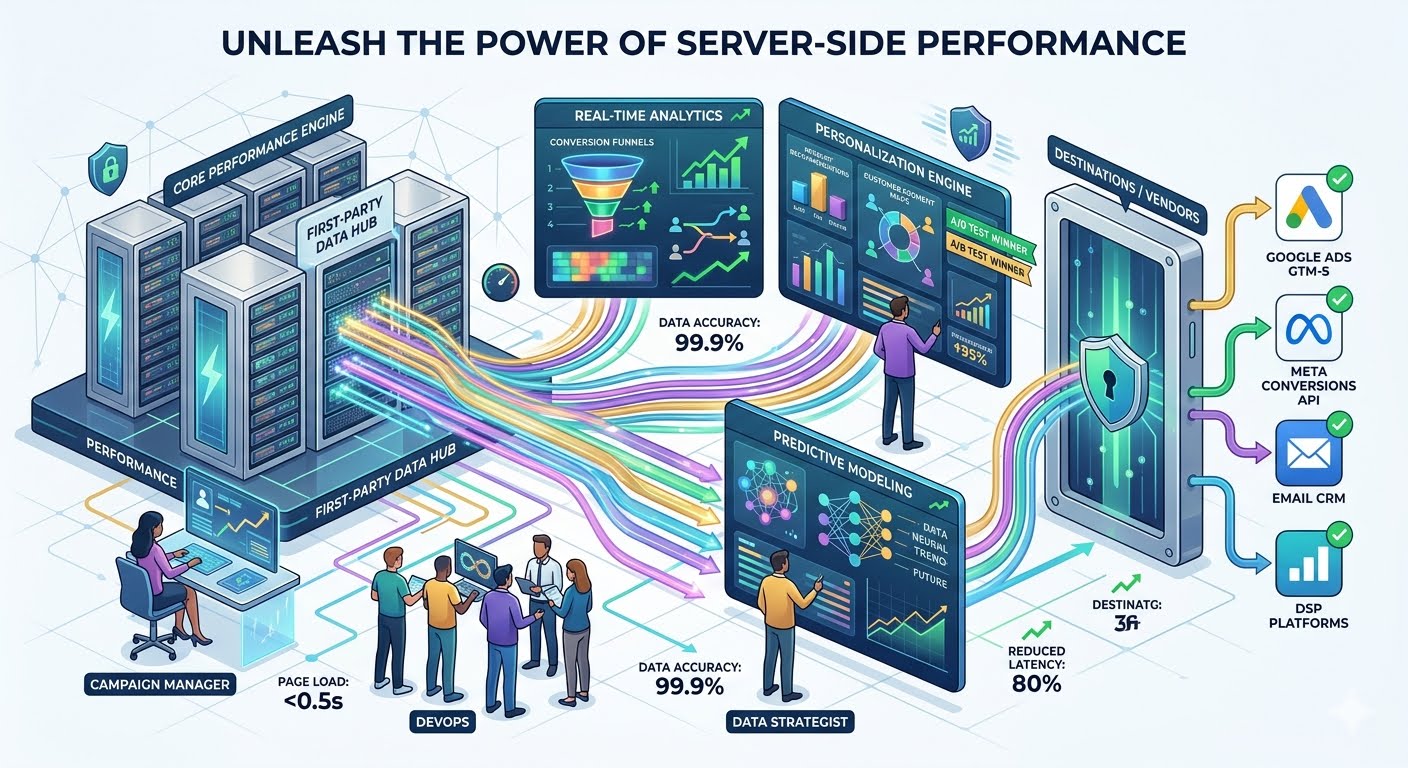
A website with a large number of analytics, advertising, and marketing scripts can become difficult to maintain. Multiple browser-side tags can increase technical complexity and potentially affect website performance.
Server-side tracking does not eliminate the need for client-side tracking in every situation, but it can move some processing away from the browser.
For organizations managing numerous platforms and integrations, centralizing part of the tracking process can make the overall setup easier to govern and maintain.
You Have the Technical Resources to Support It
Server-side tracking is more involved than simply installing a browser-based analytics tag.
It may require server infrastructure, event configuration, API integrations, monitoring, testing, documentation, and ongoing maintenance. Businesses may also need developers or specialized tracking professionals to implement the system correctly.
Because of this, server-side tracking tends to make more sense for organizations that have either internal technical resources or a trusted partner who can manage the implementation.
For a small business with limited traffic, limited advertising spend, and relatively simple tracking requirements, the additional complexity may not provide enough value to justify the investment.
When It May Not Be Worth It
Server-side tracking is not a universal replacement for browser-based tracking.
If a business has a simple website, low advertising spend, straightforward customer journeys, and accurate reporting already, adding another tracking layer may create unnecessary expense and complexity.
It is also important to remember that server-side tracking does not magically solve every measurement problem. It still requires proper event design, consent management, identity considerations, data quality checks, and accurate implementation.
Making the Decision
The best question is not simply, “Should we use server-side tracking?” Instead, businesses should ask whether the benefits justify the additional technical and operational investment.
Server-side tracking is worth evaluating when data accuracy, advertising performance, privacy controls, complex customer journeys, or tracking reliability have become significant business concerns.
For companies reaching that point, the right approach is usually to evaluate the current tracking setup first, identify where data is being lost or misrepresented, and then determine whether server-side tracking can solve those specific problems.
Ultimately, server-side tracking should be viewed as a strategic measurement tool rather than a technology upgrade for its own sake. When implemented for a clear business reason, it can provide greater control, stronger data flows, and a more resilient foundation for modern analytics and digital marketing.