In modern marketing, businesses often use multiple channels to reach potential customers. A person may see an advertisement on social media, visit a company’s website through a search engine, read an email, and finally make a purchase after clicking a promotional link. Because customers interact with brands through several touchpoints, it can be difficult to determine which marketing efforts are actually influencing their decisions. This is where marketing attribution becomes valuable.
Marketing attribution is the process of identifying and evaluating the marketing touchpoints that contribute to a customer’s conversion or purchase. Instead of simply looking at the final interaction before a sale, attribution helps businesses understand the customer journey and determine how different campaigns and channels work together. This information allows companies to make smarter, more informed marketing decisions.
Understanding What Drives Conversions
One of the biggest advantages of attribution is that it helps marketers understand which activities are contributing to results. Without attribution, a company might assume that the last advertisement a customer clicked was solely responsible for the purchase. However, the customer may have interacted with several other marketing channels before reaching that point.
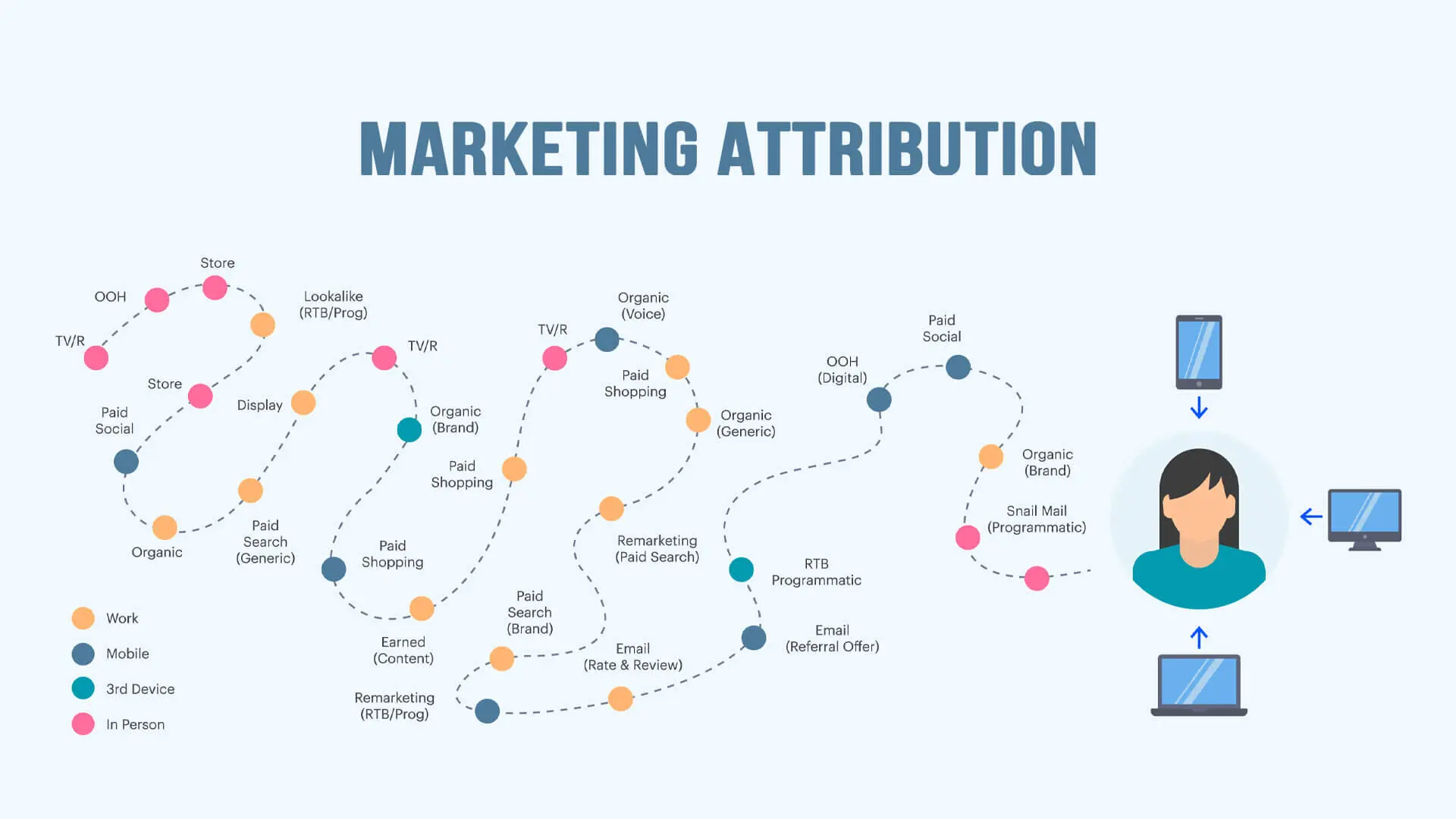
For example, a customer might first discover a business through an Instagram advertisement, later search for the company on Google, visit the website through an organic search result, and eventually purchase after receiving an email. Attribution can show that each of these interactions played a role in the customer’s decision.
By understanding these relationships, marketers can avoid making decisions based on incomplete information.
Improving Marketing Budget Allocation
Attribution also helps businesses determine where their marketing budgets should be invested. Marketing resources are limited, so companies need to know which channels are producing meaningful results.
Suppose a business spends money on social media advertising, paid search, email marketing, and display advertising. If the company only measures the final click, it might invest too much money in paid search while undervaluing social media or display campaigns that helped generate awareness earlier in the customer journey.
Attribution provides a broader view of performance. Marketers can compare channels based on their contribution to conversions and revenue, allowing them to shift spending toward strategies that provide stronger overall value.
Supporting Better Campaign Optimization
Marketing attribution is not only useful for deciding where to spend money; it can also improve individual campaigns. By examining customer interactions, marketers can identify which advertisements, messages, keywords, audiences, and content are generating the strongest results.
For instance, if attribution data shows that customers who interact with educational content are more likely to purchase later, a company may decide to produce more educational material. Similarly, if a particular audience responds strongly to video advertisements but poorly to static ads, marketers can adjust their creative strategy.
This creates a continuous process of testing, learning, and improving marketing performance.
Providing a Better Understanding of the Customer Journey
Customers rarely move directly from seeing an advertisement to making a purchase. Their journey can involve multiple interactions across different devices and platforms. Attribution helps marketers see this journey more clearly.
Understanding the customer journey can reveal important patterns. A business may discover that certain channels are particularly effective at generating awareness, while others are more successful at encouraging customers to complete a purchase. This allows marketers to assign the right role to each channel instead of expecting every marketing activity to produce the same type of result.
As a result, businesses can build campaigns that support customers throughout the entire buying process.
Reducing Decisions Based on Guesswork
Without reliable data, marketing decisions can easily become based on assumptions or personal opinions. A manager may believe one campaign is successful because it receives many clicks, while another campaign with fewer clicks may actually generate more qualified customers and revenue.
Attribution provides evidence that can support more objective decision-making. By connecting marketing interactions to business outcomes, companies can evaluate performance using measurable information rather than relying entirely on intuition.
Resolutions DMA note: useful marketing guidance connects evidence to a practical decision without promising a guaranteed result.
Improving Return on Marketing Investment
Ultimately, better attribution can help businesses improve their return on marketing investment (ROI). When companies understand which activities contribute to revenue, they can reduce spending on ineffective strategies and invest more heavily in campaigns that support business objectives.
However, attribution should not be viewed as a perfect measurement system. Customer journeys can be complex, and some interactions—such as word-of-mouth recommendations, offline conversations, or exposure to a brand without clicking an advertisement—can be difficult to measure. For this reason, marketers should use attribution alongside other forms of analysis rather than treating it as the only source of truth.
Attribution supports better marketing decisions by helping businesses understand how different marketing activities contribute to customer conversions. It gives marketers greater insight into the customer journey, improves budget allocation, supports campaign optimization, reduces guesswork, and can ultimately improve marketing ROI.
When used effectively, attribution turns marketing data into actionable insight. Instead of simply asking, “Which channel got the last click?” businesses can ask a more important question: “Which combination of marketing efforts helped move the customer toward a purchase?” That broader perspective allows marketers to make smarter decisions and build more effective strategies over time.