Marketing Key Performance Indicators (KPIs) are measurable values that help businesses determine whether their marketing efforts are actually producing results. Without clear KPIs, marketing can become a collection of activities. Posting on social media, running ads, sending emails, or publishing content. Without a clear understanding of what is working.
The best marketing KPIs connect directly to business goals. Rather than tracking every available number, businesses should focus on a small set of meaningful metrics that help answer an important question: Is our marketing helping us achieve our business objectives?
1. Start With Your Business Goals
The first step in setting useful marketing KPIs is identifying what the business is trying to accomplish. A marketing KPI should support a broader business objective.
For example, a business goal might be to increase revenue, generate more leads, attract new customers, improve customer retention, or expand into a new market. Each goal requires different measurements.
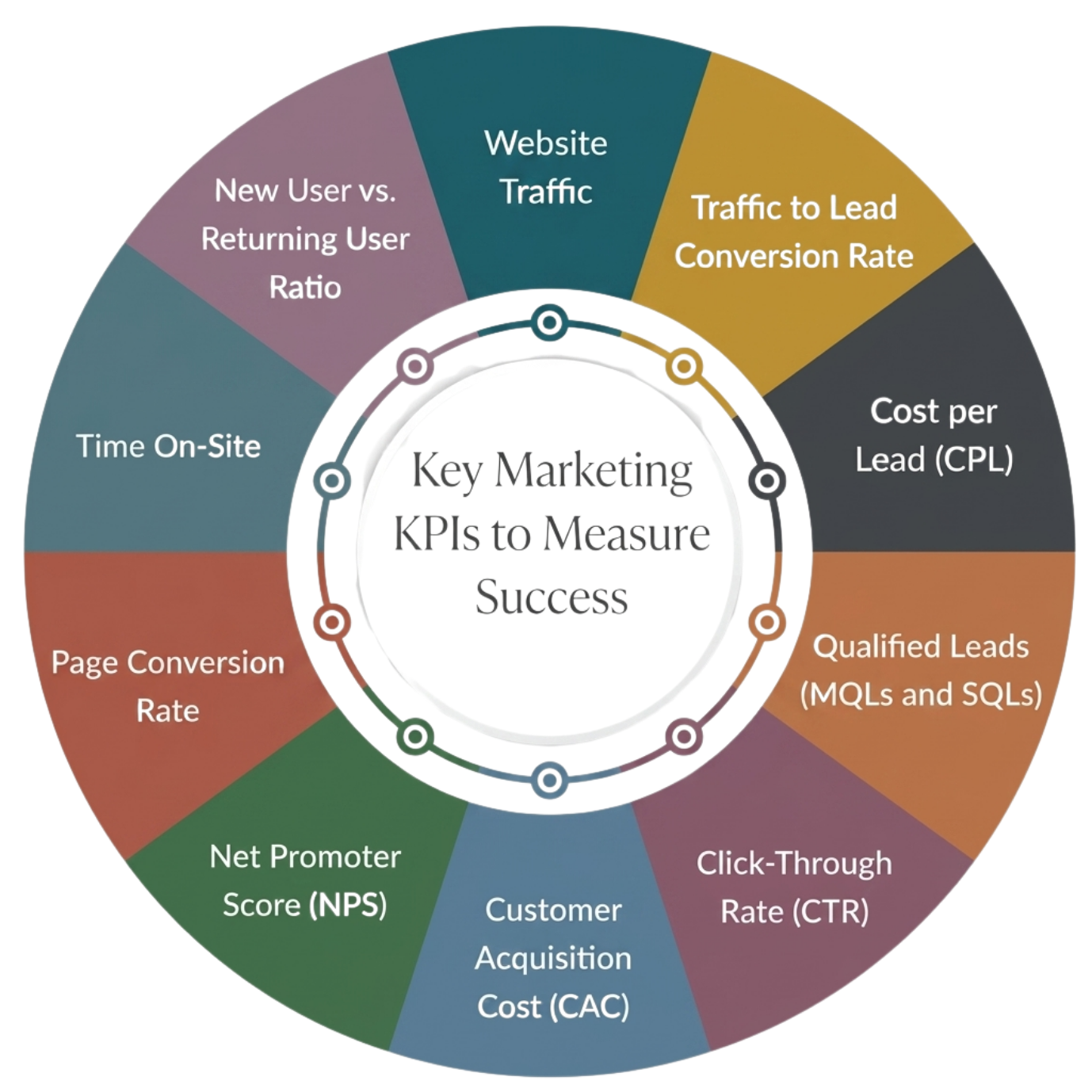
If the goal is to generate new customers, useful KPIs might include qualified leads, conversion rate, customer acquisition cost, and the number of new customers generated through marketing campaigns.
Starting with the business goal prevents marketers from focusing on numbers that look impressive but have little business value.
2. Choose KPIs That Are Relevant
Not every marketing metric is a useful KPI. Metrics such as social media likes, website visits, or email opens can provide helpful information, but they do not always indicate whether marketing is contributing to revenue or growth.
A useful KPI should have a clear connection to the desired outcome.
For example, if a company wants to increase online sales, tracking conversion rate is generally more useful than simply tracking website traffic. Ten thousand visitors may sound impressive, but if only a few people make a purchase, the traffic alone is not producing the desired result.
The goal is to measure performance, not just activity.
3. Make KPIs Specific and Measurable
Effective KPIs should be clearly defined and measurable. Avoid vague goals such as “improve social media” or “get more customers.” Instead, establish a specific target and a timeframe.
For example:
“Increase qualified leads from marketing by 20% over the next quarter.”
This KPI is easier to understand and evaluate because it identifies what is being measured, the desired improvement, and the time period.
A useful approach is to use the SMART framework: goals should be Specific, Measurable, Achievable, Relevant, and Time-bound.
4. Focus on a Few Important KPIs
Tracking too many KPIs can make marketing performance harder to understand. When everything is considered important, it becomes difficult to identify what deserves attention.
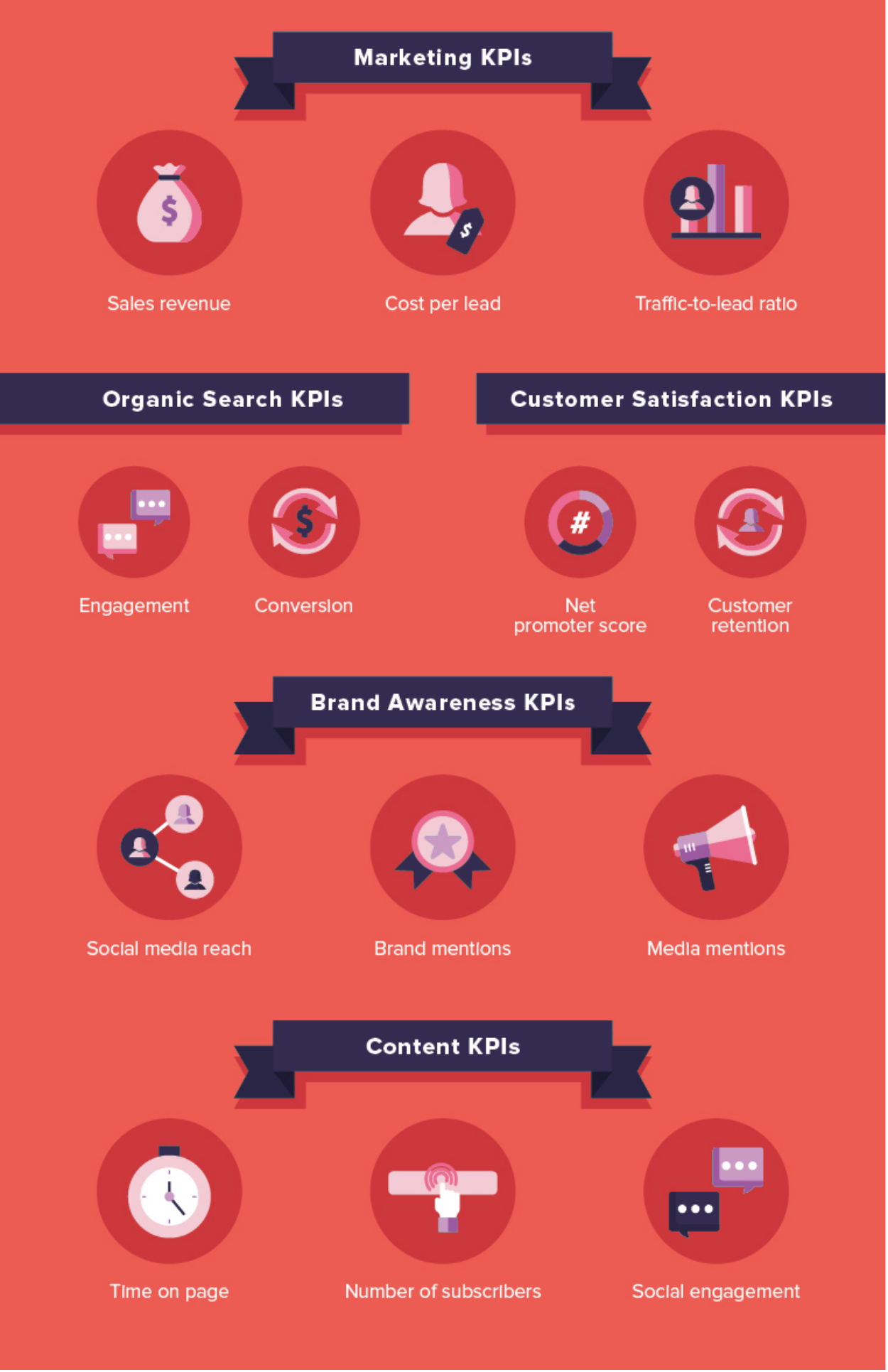
Most businesses are better served by selecting a small group of KPIs that represent the most important stages of the customer journey. These may include:
- Reach and awareness: impressions, website traffic, or brand searches
- Engagement: click-through rate, content engagement, or email engagement
- Lead generation: number of qualified leads and cost per lead
- Sales: conversion rate, revenue, and customer acquisition cost
- Customer retention: repeat purchase rate, retention rate, or customer lifetime value
The exact KPIs should depend on the company’s goals, industry, audience, and marketing strategy.
5. Include Both Leading and Lagging Indicators
A strong KPI system includes both leading and lagging indicators.
Leading indicators provide an early signal of future performance. Examples include website inquiries, email click-through rates, advertising engagement, and qualified leads.
Lagging indicators measure the final results of marketing efforts. Examples include revenue, sales, profit, and customer retention.
For instance, a company may see an increase in qualified leads before those leads become paying customers. Monitoring both measures helps marketers understand whether current activities are likely to produce future results.
6. Set Benchmarks and Targets
A KPI becomes much more useful when it has context. Simply knowing that a campaign generated 500 leads does not tell you whether the campaign performed well.
Compare performance against previous periods, industry benchmarks, historical averages, or predetermined targets.
For example, a business might set a target to reduce customer acquisition cost from $75 to $60 while maintaining the same level of sales. This creates a clear standard for evaluating success.
Targets should also be realistic. Setting unrealistic goals can lead to poor decisions, wasted spending, and unnecessary pressure on marketing teams.
7. Review and Adjust KPIs Regularly
Marketing conditions change. Customer behavior, advertising costs, competition, and business priorities can all shift over time. Because of this, KPIs should not be treated as permanent.
Review KPIs regularly and ask:
Are these metrics still connected to our goals? Are they helping us make better decisions? Are we measuring outcomes rather than just activity?
A KPI that was valuable six months ago may become less useful after a strategy or business objective changes.
Useful marketing KPIs do more than provide numbers—they help businesses make better decisions. The strongest KPIs are directly connected to business goals, clearly measurable, realistic, and focused on meaningful outcomes.
Instead of tracking every available marketing metric, businesses should identify the few measurements that best demonstrate progress. By combining leading and lagging indicators, establishing clear targets, and reviewing performance regularly, marketers can turn data into actionable insights and build marketing strategies that are easier to evaluate and improve.